Open
Built for families who want serious offshore capability,
premium comfort and the freedom to fish, cruise or entertain.
Open 402
NEW Open 352
NEW Open 322
NEW Open 302
Open 282
Open 262
Open 252
Open 232
Open 212
Heritage
A refined crossover lineup designed for coastal cruising, ample seating,
family days and some fishing when the moment calls for it.
NEW Heritage 321
Heritage 261
NEW Heritage 251
Heritage 231
Masters
Shallow-water performance, fishing-focused layouts and
everyday comfort built for family life and fishing.
Perfect blend of offshore capabilities with inshore conveniences.
NEW Masters 288
Shallow-draft bay boats built around casting space, livewells and skinny-water fishing.
Masters 267
Masters 267OE
Masters 247
Masters 247OE
Masters 227
Buying a boat is thrilling, but understanding future Blue Book valuations, influenced by features and build quality, is crucial for resale value. Use this guide on choosing boats with reputable construction and advanced technology to maximize long-term investment potential.

-
•Blue Book values help estimate depreciation and guide negotiations
-
•Boats with desirable standard features and up to date technology tend to hold value better over time
-
•Prioritize brands with strong construction and reputable OEM partnerships to protect long term value
Buying a boat can be an exhilarating experience, whether you're a seasoned captain or a first-time buyer looking to explore the open waters. Often overlooked in the process of a new boat purchase is the future Blue Book valuation of that vessel. Understanding the dynamics of boat valuation, particularly the influence of Blue Book values and how new boat features impact future resale values, is crucial in the boat buying process.
Blue Book values, such as NADA Guides among others, offer estimated fair market prices for boats based on various factors like make, model, year, condition, and both standard and optional equipment. These values serve as a benchmark for pricing and negotiation, ensuring transparency in boat transactions. While Blue Book values are generally thought of in terms of used boats, they can also be an integral part of your decision-making process when shopping for a new vessel. Let's delve deeper into how the features of a new boat can translate into higher used values over time.
When purchasing a new boat, understanding Blue Book values is essential for several reasons. Firstly, it helps buyers gauge the initial depreciation rate of different models and brands. Although new boats generally depreciate upon purchase, choosing a brand with a reputation for retaining value can mitigate this over time. Brands known for durable construction, innovative technology, and strong dealer networks often command higher resale prices in the secondary market.
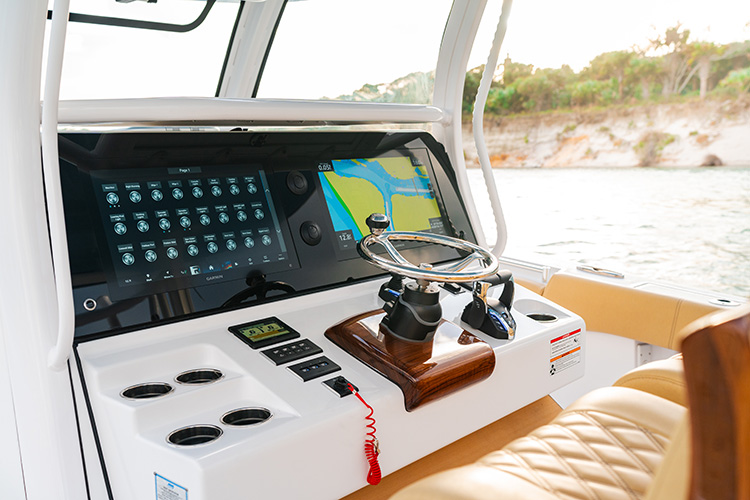
The features included as standard on a new boat can significantly impact its future resale value. In most cases a boat with standard features will have a higher resale value than the same boat with the same equipment added as an option. Boats equipped with modern amenities such as advanced navigation systems, high-quality upholstery, durable hull materials, and efficient engine systems tend to hold their value better. These features not only enhance the boating experience but also contribute to the boat's appeal to future buyers. Likewise, boats equipped with cutting-edge technology, such as integrated electronic systems, touchscreen displays, robust stereos, and technology such as SeaKeeper Ride, also attract higher resale values. These features not only improve navigation and control but also demonstrate the boat's adherence to current technological standards, appealing to tech-savvy buyers.
The build quality of a boat plays a pivotal role in its long-term value retention. Brands renowned for superior craftsmanship, use of high-quality materials, and attention to detail typically command higher resale prices. Brands like Sportsman, certified in ABYC and NMMA guidelines are ones to look for during your buying process as you know they are following a strict building process that ensures a safe and well-built boat utilizing industry best practices. It’s also always smart to pay attention to the suppliers the brand you are looking at is partnered with as their reputation also matters. Look for manufacturers that seek out partnerships with reputable brands such as Yamaha, Mercury, Garmin, SeaKeeper, or JL Audio as they will help lead to retained value down the road.
Buying a new boat involves considering not only immediate needs and preferences but also long-term investment potential. Understanding how different boat brands can influence resale value allows buyers to factor in long-term costs and benefits. By opting for boats equipped with desirable features, innovative technology, and reputable construction, you can maximize your investment and enjoy enhanced resale value in the future. Ultimately, navigating the boat buying process with awareness of these factors ensures a smoother journey toward getting on the water in a boat with the best value retention.
See you on the water!