Open
Built for families who want serious offshore capability,
premium comfort and the freedom to fish, cruise or entertain.
Open 402
NEW Open 352
NEW Open 322
NEW Open 302
Open 282
Open 262
Open 252
Open 232
Open 212
Heritage
A refined crossover lineup designed for coastal cruising, ample seating,
family days and some fishing when the moment calls for it.
NEW Heritage 321
Heritage 261
NEW Heritage 251
Heritage 231
Masters
Shallow-water performance, fishing-focused layouts and
everyday comfort built for family life and fishing.
Perfect blend of offshore capabilities with inshore conveniences.
NEW Masters 288
Shallow-draft bay boats built around casting space, livewells and skinny-water fishing.
Masters 267
Masters 267OE
Masters 247
Masters 247OE
Masters 227
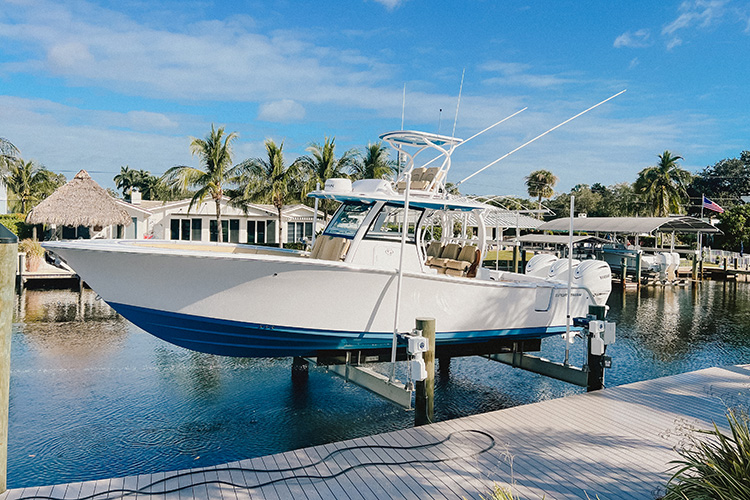
A boat lift offers unparalleled protection and convenience for storing your boat, keeping it safe from water damage and ready for use at a moment’s notice. This blog explores the pros and cons of boat lifts, comparing their upfront costs and long-term benefits to other storage options. Discover if a boat lift is the right choice for your boating lifestyle.

-
•A boat lift provides garage-like protection and convenience that can save you time and money over the long term.
-
•Compare upfront lift costs to marina storage to determine if breaking even is realistic within a few years.
-
•If you own waterfront property, a lift keeps your boat protected and makes maintenance easier while preserving resale value.
When we walk into a car dealership to buy a new car, we already know where it’s going to be parked. You’ve got a few options depending on your home’s design. A garage is the ideal scenario for ultimate protection, shielding your car from weather and wear. But not every vehicle fits into a garage. My truck, for example, wouldn’t fit into any standard garage unless it was custom-designed. If you’re buying a small sedan, though, you’d likely have no trouble. Other options might include a carport, which offers some protection—a metal roof at minimum, or something more integrated into your home’s design. Lastly, there’s exterior parking, like the driveway or street parking, which offers no real protection at all. For some, storage considerations may influence the car they buy. If you’re like some folks I know, you wouldn’t even consider a vehicle you couldn’t keep in the garage.
Walking into a boat dealership requires the same forethought about storage. Boats need proper storage to protect your investment, and your options vary widely in both cost and convenience. Trailer storage at home is often considered the “free” option, but it comes with its own challenges. It requires a tow vehicle, which isn’t cheap, and adds wear and tear to your vehicle while eating up valuable time for loading, unloading, and launching. Storage at a marina, whether in-water or dry stack, is another popular choice, but it can be expensive. On average, marina storage costs between $50 and $200 per foot per year. For a 25-foot boat, you could easily be looking at $4,000 annually.
If you’re lucky enough to own waterfront property with navigable water and the proper permits, a boat lift is an option worth considering. Installing a boat lift at your dock comes with a significant upfront cost—around $12,000 on average—but in my opinion, the ease and convenience it provides outweighs any other storage method. You’ll save time, effort, and money in the long run, especially if you’re planning to keep your boat for years. Let’s dive deeper into the pros and cons of a boat lift and help you decide if it’s the right choice for your situation.
A boat lift provides unparalleled protection for your boat. Much like a garage for your car, it keeps your boat safe from the elements, including water damage, algae growth, and corrosion. Boats left in the water are subject to constant wear from waves, tides, and debris, not to mention the damage caused by prolonged exposure to saltwater. By keeping your boat elevated and dry, a lift extends its lifespan and saves you from frequent and costly cleaning and maintenance.
Beyond protection, a boat lift simplifies your boating routine. When your boat is stored on a lift, you don’t need to spend time hauling it to a ramp or waiting in line to launch during busy weekends. Your boat is ready to go whenever you are, making those spontaneous sunset cruises or quick fishing trips far more convenient. Additionally, having your boat lifted keeps it accessible for inspections and minor maintenance tasks, like cleaning the hull or checking for damage, without the need for a trailer or a service yard.
From a financial perspective, the upfront cost of a boat lift may seem steep, but it can save you money over time. Compared to the recurring expenses of marina storage, the investment in a lift often pays off within a few years, especially for larger boats. For example, a $12,000 boat lift may break even in just three years when compared to marina storage costs for a 25-foot boat. Plus, the lift protects your boat’s resale value by preventing the wear and tear that comes with extended water exposure.
Of course, boat lifts aren’t without drawbacks. Not every dock or waterfront is suitable for a lift, and installation may require permits, modifications, or professional assistance. The lift itself will also require maintenance to keep its motors, hydraulics, and cables in good working order. Additionally, the upfront cost can be a barrier, especially for those with smaller boats or less frequent usage.
Still, if you have the right setup and plan to use your boat often, the convenience and peace of mind a lift provides are hard to beat. For me, the lift is the boating equivalent of a garage—a safe, convenient storage option that makes the entire boating experience more enjoyable.
So, should you invest in a boat lift? If you have the right property, the means, and the desire to simplify your boating lifestyle, my answer is a resounding yes. Not only will it save you time and money in the long run, but it will also enhance your overall enjoyment of life on the water.