Proper battery maintenance is essential for keeping your Sportsman boat running reliably. Learn how to properly charge, maintain and store your marine batteries to extend their life and avoid issues on the water.

-
•Use a quality multi-bank marine charger and charge after every trip to prevent sulfation and extend life
-
•Always top off batteries after each trip and never store with a partially discharged battery
-
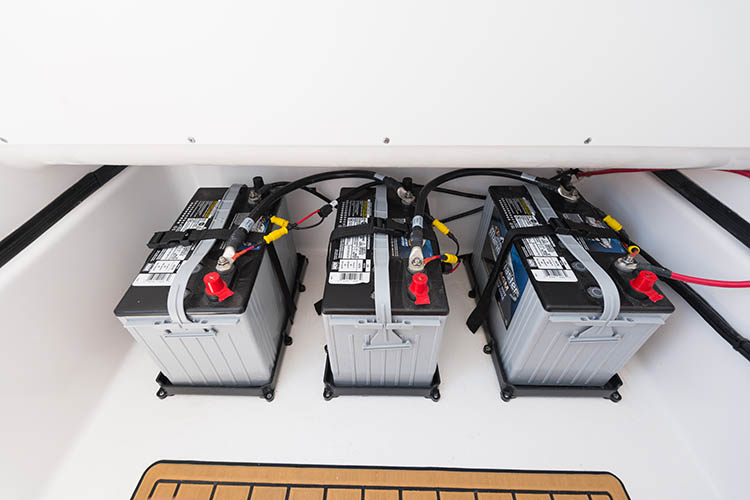
•Secure batteries and keep terminals clean while regularly checking voltage to catch problems early
Your boat’s batteries are the quiet workhorses behind every successful day on the water. From firing up your outboards to powering electronics, pumps and lights, a healthy battery system is critical on a Sportsman Boats center console. The good news is that with the right habits, you can extend battery life, avoid frustrating breakdowns and keep everything running smoothly season after season.
Charging the Right Way
1. Use a Quality Marine Battery Charger
A smart onboard charger is one of the best upgrades you can have. Look for multi-bank chargers that can independently charge each battery. Cheap or automotive chargers can overcharge or undercharge, shortening battery life.
2. Charge After Every Trip
Even if you only ran the boat for a few hours, top off your batteries when you get home.
• Prevents sulfation, a leading cause of battery failure
• Keeps voltage stable
• Ensures you’re always ready for the next trip
Rule of thumb: never store your boat with partially discharged batteries.
3. Avoid Overcharging
Modern smart chargers automatically switch to maintenance or float mode when batteries are full. If you’re not using a smart charger, unplug once fully charged. Overcharging can lead to:
• Boiling off electrolyte in lead-acid batteries
• Reduced lifespan
• Internal damage
Battery Maintenance Essentials
1. Keep Terminals Clean
Corrosion is the enemy.
• Inspect terminals regularly
• Clean with a wire brush and baking soda solution if needed
• Apply dielectric grease or terminal protectant
A loose or corroded connection can mimic a dead battery.
2. Check Water Levels (Lead-Acid Only)
If you’re running flooded lead-acid batteries:
• Open the caps periodically
• Ensure plates are covered with distilled water, not tap water
Skip this step if you’re using AGM or lithium batteries, as they’re sealed.
3. Secure Your Batteries
Sportsman boats are built for performance, and chop happens. Make sure:
• Batteries are tightly strapped down
• No movement occurs underway
Loose batteries can damage terminals and internal plates.
4. Monitor Voltage
A simple voltmeter can save you a lot of trouble.
• Fully charged battery: ~12.6–12.8V (engine off)
• Below 12.2V: needs charging
• Below 12V: potentially damaged
Regular checks help you catch problems early.
Storage Tips
If you’re storing your Sportsman boat for weeks or months:
• Fully charge batteries before storage
• Disconnect or use a battery switch to eliminate parasitic drain
• Keep batteries on a smart trickle charger if possible
Neglecting batteries in the off-season is one of the fastest ways to kill them.
Common Mistakes to Avoid
• Letting batteries sit discharged for long periods
• Mixing old and new batteries in the same bank
• Using the wrong charger type for your battery (AGM vs lithium vs flooded)
• Ignoring slow cranking or dim electronics (early warning signs)
Your battery system might not be the flashiest part of your Sportsman Boats, but it’s one of the most important. A few simple habits, like charging after every trip, using the right equipment and performing basic maintenance, can mean the difference between a flawless day on the water and being stranded at the dock.
Take care of your batteries, and they’ll take care of you when it matters most.